

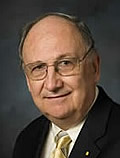
 Michael MacCracken has been Chief Scientist for Climate Change Programs with the Climate Institute in Washington D.C. since 2002, and was elected to its Board of Directors in 2006. The Climate Institute is an international leader in moving nations, regions, and people to address climate change in a collaborative manner and protect the balance between climate and life on earth.
Dr. MacCracken received his B.S. in Engineering degree from Princeton University in 1964, and 1968 completed his Ph.D. at the University of California Davis/Livermore. His dissertation involved development and application of an early global 2-D climate model to analyze the plausibility of then current hypotheses for the causes of ice age cycling. Following his graduate work, he joined the Physics Department of the University of California’s Lawrence Livermore National Laboratory (LLNL) as an atmospheric physicist. His research for the ensuing 25 years at the LLNL focused on development and application of numerical models to study of climate change (including study of the potential climatic effects of greenhouse gases, volcanic aerosols, land-cover change, and nuclear war) and factors affecting air quality. At LLNL, he also served as division leader for atmospheric and geophysical sciences from 1987-1993 after serving as Deputy Division Leader from 1974-1987.
From 1993-2002, Dr. MacCracken was on assignment as senior global change scientist to the interagency Office of the U.S. Global Change Research Program (USGCRP) in Washington D.C. From 1997-2001, he was executive director of the USGCRP’s coordination office for the US National Assessment. He also coordinated the official U.S. Government reviews of several of the assessment reports prepared by the Intergovernmental Panel on Climate Change (IPCC), and has been a co-author/contributing author of various chapters in some of the reports.
On September 30, 2002 he simultaneously retired from LLNL and the office of the USGCRP. In addition to his volunteer role with the Climate Institute Dr. MacCracken is engaged in other tasks; including serving on the integration team for the Arctic Climate Impact Assessment. As president of IAMAS, MacCracken served on the Executive Committee of International Union of Geodesy and Geophysics (IUGG). MacCracken is a fellow of the American Association for the Advancement of Science (AAAS) and a member of the American Meteorological Society, the Oceanography Society, and the American Geophysical Union. His current research is focused on helping to limit global warming.
Honors:
- Harvard Project on International Climate Agreements paper competition, honorable mention for paper: Moore, F. C., and M. C. MacCracken, 2009: Life-times-leveraging: An approach to achieving international agreement and effective climate protection using mitigation of short-lived greenhouse gases.
- Nobel Peace Prize jointly to Intergovernmental Panel on Climate Change (served as contributing, author, reviewer, and delegation member) and Al Gore (scientific advisor), 2007
- Fellow, American Association for the Advancement of Science, elected September 1998
- Phi Kappa Phi (honor society), University of California, 1966
- Fannie and John Hertz Foundation Fellowship, 1964-1968
- Phi Beta Kappa (honor society), Princeton University, 1964
Website: www.climate.org
Return to Board Members Index
