

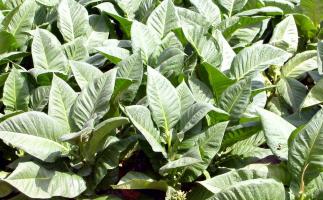
The race for viable tobacco based jet fuel is now smoking hot! In fact Boeing's Project Solaris, and Virginia company Tyton Bioenergy are each so close to lift off with their fuel products that we may be flying leafy green tobacco powered flights within months.
Boeing launched their Project Solaris in December 2014. The tobacco used has no nicotine and is grown for its seeds which are rich in oil used to make the bio jet fuel. It's a hybrid tobacco that currently grows on 50 hectares of land in Limpopo province, in the northeast of South Africa. Some two to three tonnes of crude oil can be pressed from its seeds per hectare per year. Solaris has been bred to have leaves much smaller than the flappy ones of a normal tobacco plant, and to have oily seeds. The scientists believe it can overcome the notorious troubles that arose around first-generation biofuels such as sugar cane and maize, accused of competing with food production. Good news is it's not toxic so it can be rotated with food crops! Over the lifecycle of the fuel, it will lead to a cut of 75 % in carbon emissions compared with its fossil fuel counterparts.
While Boeing's project has focused on South African tobacco, Danville, Virginia's Tyton Bioenergy has been working with 15 foot high plants local to Virgnia. According to Tyton “This proprietary energy tobacco can produce up to three times the amount of ethanol per acre as corn and three times the oil per acre as soy.” They have a patent for a method extracting the oil quickly with no waste. The non fossil jet fuel era has begun!
Guess this is one way to still get tobacco on a non smoking flight.
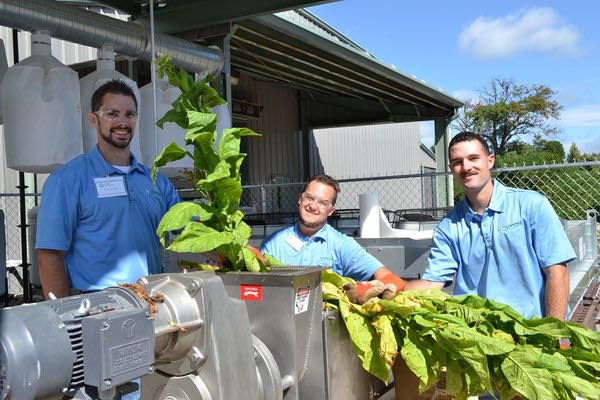
Photo courtesy of Tyton Bioenergy.

Photo by Bob Adams from Amanzimtoti, South Africa, CC BY-SA 2.0 (https://creativecommons.org/licenses/by-sa/2.0), via Wikimedia Commons
