
The world has witnessed the recent extreme weather impact on Texas, not experienced since it’s coldest February since 1989. Spokesperson Clare Nullis from the World Meteorological Organization describes the phenomena as the Polar Vortex:
The vortex is an “area of low pressure and cold air, surrounding either of the poles”, she said. “It normally keeps cold air in the Arctic, warmer air in the lower latitudes. It weakened this winter so that meant that the cold air came spinning out of the Arctic… warm air by contrast went into parts of the Arctic.”
Ms. Nullis added that no less than 62 all-time daily cold minimum temperature records were broken in the United States from February 11-16, according to the US National Oceanic and Atmospheric Administration.
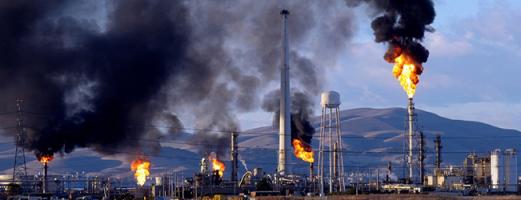
Unfortunately, the natural phenomena prompted actions in the energy industry sector to minimize the damage to their operations and machinery, which perpetuates the effects of global warming. According to the Texas Commission on Environment Quality (TCEQ), the resulting power outages caused refineries and petrochemical plants to shut production and burn and release 318 tonnes of benzene, carbon dioxide and sulfur dioxide into the atmosphere to protect their processing plants.
Citing the Mauna Loa station in Hawaii – a benchmark reference station – Ms. Nullis noted that average carbon dioxide concentrations in February were 416.75 parts per million, up from 413.4 parts per million in February 2020.
Ms. Nullis then references a popular misconception to the temporarily reduced emissions due to COVID-19 restrictions to be a reason for society to be lax in the fight against global warming:
“The fact that we had a relatively cold month does not negate climate change, it does not reverse the long-term trend in rising temperatures due to global warming”, she said. “The fact that we’ve got COVID-19 which temporarily put a brake on emissions last year does not mean that the need for climate action is diminishing.”
Sources:
https://news.un.org/en/story/2021/03/1086752
https://www.cbc.ca/news/world/texas-deep-freeze-refineries-pollution-1.5922111#:~:text=577-,The%20largest%20U.S.%20oil%20refiners%20released%20tonnes%20of%20air%20pollutants,one%20environmental%20crisis%20triggered%20another.&text=Shutdowns%20led%20to%20the%20refineries,damage%20to%20their%20processing%20units.
Featured Photo courtesy of Fractracker Alliance (https://www.fractracker.org).
