
Europe is bracing for a new phase of energy turmoil, the most severe since the COVID‑19 pandemic and Russia’s ongoing assault on Ukraine. On February 28, 2026, the United States and Israel carried out coordinated, wide‑ranging strikes on Iran, sharply escalating the conflict across the Middle East and disrupting critical geopolitical supply chains. The closure of the Strait of Hormuz sent global oil and gas prices soaring.
Germany, directly exposed to the fallout from the Iran conflict, has moved to fast‑track 12 GW of new onshore wind capacity. Like many European nations, Germany remains heavily dependent on fossil fuel imports, an increasingly unreliable foundation for its energy system. The continent now faces what officials describe as a “perpetual” energy crisis.
Germany’s Minister for Economy and Energy, Katherina Reiche, underscored the shift in a recent statement, declaring that “energy policy is now security policy.” Even before the latest Middle East escalation, Germany had been grappling with energy instability after Russia abruptly halted oil flows through a key pipeline in the middle of winter, leaving households unable to heat their homes. In response, the Baden‑Württemberg Ministry of the Environment, the Bavarian state government, and several other federal states have urged an immediate increase in onshore wind tender volumes for 2026
In the UK, Energy Secretary Ed Miliband echoed similar concerns, warning that there can be “no energy security while we are so dependent on fossil fuels.” The UK government has responded with plans to launch additional offshore wind auction rounds by July 2026. The new capacity will build on the most recent allocation round, which already generates enough electricity to power roughly 23 million homes and offsets gas imports equivalent to about 80 LNG tankers each year.
Sources:
https://windeurope.org/news/germany-and-the-uk-boost-wind-energy-as-response-to-energy-crisis/
https://www.gov.uk/government/news/government-to-go-further-and-faster-in-becoming-energy-secure
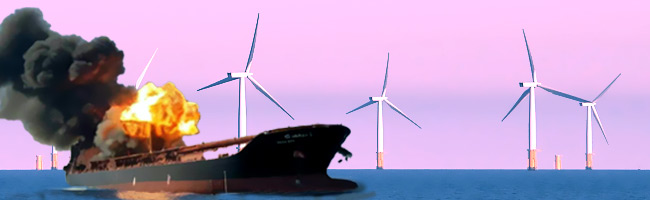
Windmill background image courtesy of: Rob Farrow / Offshore windfarm, Skegness, Creative Commons
