
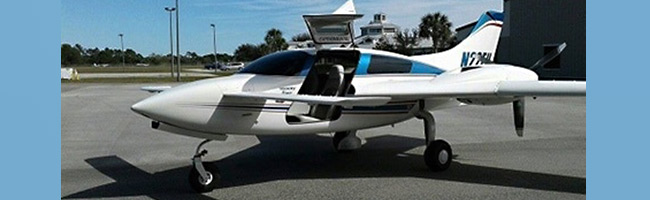
Dude, where's my plane? Canadian company Hempearth creates the world's first airplane made from and fueled by hemp!
Different parts of the hemp plant have been used for centuries to create many different types of products including consumer textiles, medicine, building materials, bio-fuel, paper, food, and more recently even batteries. “Hemp is a sustainable crop that needs no pesticides or herbicides to grow, so the plane would have a carbon footprint significantly smaller than that of standard planes.” So, when Canadian Derek Kesek's imagination took things a step further to a desire to create a hemp plane it wasn't such a "far out" idea. He founded Hempearth in 2014 and embarked on a plan to build an airplane that consisted of as much hemp as possible. 75% or better of the aircraft being built is made from hemp. "At first, people laughed at the concept and even joked around saying things like ha-ha you can smoke at too."
Today the world’s first ever hemp plane is an elegant and sleek four-seater single engine design aircraft that has cruising speeds ranging at a little over 250 miles per hour. It had a has a wing span of 36 feet. Many of the interior parts such as the seats, pillows, and outer shell are also made of hemp.
"By removing as much of the non-sustainable materials and toxic fiberglass materials as possible and replacing them with hemp, we’re helping to create an aircraft that is not only stronger than traditional aircraft but will also leave a footprint on the environment that is virtually zero in comparison to current forms of aviation manufacturing."
The plane is powered entirely by hemp bio-fuel which releases zero emissions into the atmosphere. No high flying carbon footprint from a hemp plane flight!
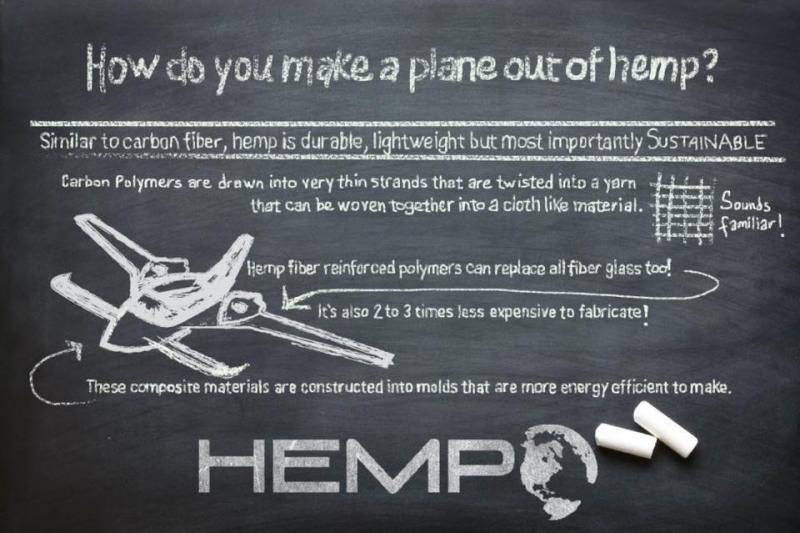
Photo courtesy of HEMPEARTH (https://hempearth.ca).
(TOP) Plane photo courtesy of HEMPEARTH (https://hempearth.ca).
