

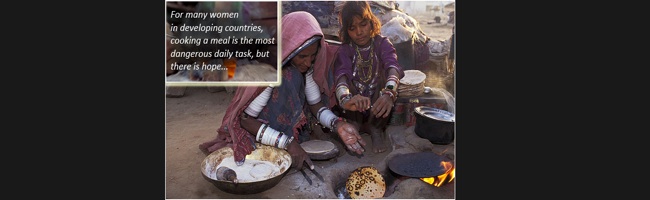
ERA Science Board members Leslie Cordes and Dr. Omar Masera have been instrumental in addressing and finding possible solutions to one of the planet’s pressing environmental and health concerns. In impoverished communities across the globe, families prepare food indoors on unsafe cookstoves, createing harmful pollution with detrimental health impacts to the families, and a negative carbon footprint on the environment.
Cookstove smoke is a serious environmental and health risk. A recent study found that indoor pollution from unsafe household cookstoves kills 4 million people every year. 42% of the world’s population is affected by indoor smoke and pollution on a daily basis, with the worst hit areas including Africa, India, China and Island nations around the world. Two ERA Science Advisory Board members are working to change this.
Dr. Omar Masera and Leslie Cordes are working to introduce cleaner cookstoves to affected areas, combating an issue that is responsible for up to 4% of the world’s entire disease burden and contributes to climate change through greenhouse gas emissions.
Leslie Cordes is a Senior Director of Energy and Climate at the United Nations Foundation in Washington DC. She also serves as a Senior Director at the Global Alliance for Clean Cookstoves in Washington, DC. Ms. Cordes is on the frontlines of GACC’s initiatives to address the pressing issue of cookstoves. The GACC supports research and innovation in design and performance to make clean cooking affordable and accessible, working on a global level and focusing on policy. The non-profit’s goal is to foster the adoption of clean cookstoves in 100 million households by 2020.
Dr. Masera received a 2007 Nobel Peace Prize as a member of an intergovernmental panel on climate change. He is a professor at the Universidad Nacional Autónoma de México, led “Project Patsari,” a program that distributes safer Patsari stoves to families in rural Mexico. “Project Patsari” was awarded the Ashden Award, which recognizes enterprises that promote “sustainability for all.”
Some solutions to this issue are the incorporation of cleaner cookstoves such as the Patsari stove, advanced biomass cookstoves, and forced-air-stoves, all of which can reduce air pollution. GACC also encourages target countries to create market-based solutions to the issue.
According to Dr. Masera, "To make safer stoves available to local people, you need to design a stove that has clean combustion, that is affordable, and that works for traditional cooking purposes.”
For more information on clean cookstoves initiatives:
