
This present year may prove to be the most defining year for Californians in terms of preparing for the worst ecosystem disaster to ever be recorded. Meteorologists, climate researchers and scientists have been studying atmospheric modeling and abundant natural vegetation such as chamise to forecast a scenario most likely to materialize for most of California.
Chamise dominates the native chaparral ecosystem throughout the coastal state of California, including dense shrublands that are too arid for trees. Chamise, usually dismissed by many people as a weed, is classified as a shrub, but is intently studied by environmental researchers and climate scientists as an indicator of how dry whole swaths of the landscape are becoming much drier.
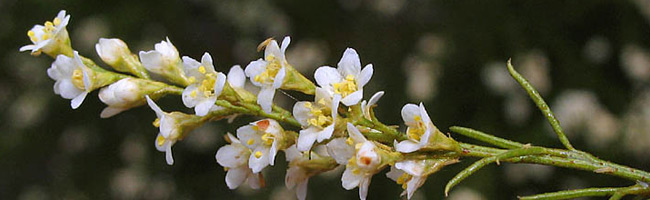
The chamise plant is well adapted to ride out droughts without a single drop of water. Amazingly in the driest of climates, chamise sprouts small white flowers which attract insect pollinators which in turn attract birds resulting in a complex ecosystem from this single particular plant. An intense fire will obliterate the chamise shrub, leaving charred stems behind. But the chamise shrub can regenerate from its base burl structure which is shielded from fire. These days, fire scientists are as much interested in the chamise's regenerative abilities as they are in the chamise's current levels of dehydration, since that is an indicator of how dry the rest of the ecosystem's vegetation is. The levels are alarming.
For this year of 2022, scientists were shocked to discover chamise did not generate any new growth from the previous year in 2021. Chamise, the hardiest of shrubs, which can regenerate from a fire, has not reproduced in the California landscape since the fire season of 2020. To the layman, you and I, we wouldn't have noticed, but to researchers, it spells doom. If the 2019 Kinkade Fire that burned 80K acres in Northern California and the hundreds of fires sparked by electrical storms in 2020 didn't shock you, then this year of 2022 may have you on the run.
As much as people are tired of hearing about climate change, let's put this drought and cascading fire season into perspective. Before humans arrived en masse, the chaparral only burned periodically. If a lightning storm ignited the vegetation without rain to drench the ignition and subsequent burning, chamise still regenerated. The difference now is that humans inhabit more of the landscape than the ecosystem can support. Hence the non-regenerating chamise shrub is a tell-tale sign something or someone is out of balance with nature.
https://www.wired.com/story/the-humble-shrub-thats-predicting-a-terrible-fire-season/?bxid=5ee17516cb988a675a9ab182&bxid=5ee17516cb988a675a9ab182&cndid=29865279&cndid=29865279&esrc=&esrc=&hasha=0c41baccc043d54154f93f2fa4d1c7c6&hasha=0c41baccc043d54154f93f2fa4d1c7c6&hashb=82e6647e5b2c18fc07f41f755ce1e5c60b725f2d&hashb=82e6647e5b2c18fc07f41f755ce1e5c60b725f2d&source=EDT_WIR_NEWSLETTER_0_ENGAGEMENT_ZZ&source=EDT_WIR_NEWSLETTER_0_ENGAGEMENT_ZZ&utm_brand=wired&utm_brand=wired&utm_campaign=aud-dev&utm_campaign=aud-dev&utm_content=WIR_PaywallSubs_042822_Classics&utm_content=WIR_PaywallSubs_042822_Classics&utm_mailing=WIR_PaywallSubs_042822_Classics&utm_mailing=WIR_PaywallSubs_042822_Classics&utm_medium=email&utm_medium=email&utm_source=nl&utm_source=nl&utm_term=WIR_PaywallSubs_Active_EXCLUDE_DailyTopClickers&utm_term=WIR_PaywallSubs_Active_EXCLUDE_DailyTopClickers
Photo by Anthony Valois (https://www.smmflowers.org), courtesy of the National Park Service.
