

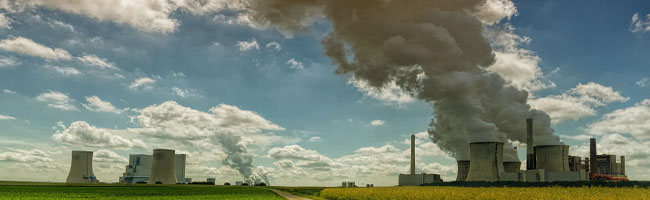
Scientists and engineers invent technologies to counter the effects of diminishing forests and plant life which provides photosynthesis to convert carbon dioxide to oxygen.
Scientist report that the high concentrations of non-natural carbon dioxide emissions need to be literally vacuumed from the atmosphere to minimize the greenhouse effect. Such expenditures are stagnant due to unfeasible economic and geopolitical agreements. As an alternative, engineers have developed solutions to capture those greenhouses gasses at the source instead of allowing those emissions to escape into the environment.
One such technology to repurpose man-made greenhouse gasses, is the conversion of carbon dioxide into marketable raw materials such as industrial-grade rock aggregate. This carbon-based rock, which sequesters carbon emissions, can be used in everything from roads and bridges to office buildings and residential homes.
CEO Brent Constantz, Biological & Geological Sciences Ph.D., explains his company, Blue Planet, processes raw flue gas taken directly at the flue of power plants and converts it immediately to carbonate. This carbonate is processed into artificial limestone, which can be provided to local industry saving the cost of acquiring and transporting limestone aggregate, which mostly comes from British Columbia. Also, the collection of emissions directly from the flue removes the need to purify carbon dioxide, which reduces cost of process investment. “The purification step is an energy and capital-intensive process,” says Constantz. “We take the raw flue gas and convert it directly to carbonate. We don’t have the energy penalty.”
Sources:
https://eandt.theiet.org/content/articles/2019/02/six-ideas-for-co2-reuse-a-pollutant-or-a-resource/
https://www.sciencedirect.com/science/article/abs/pii/S0896844617300694
Power plant photo by Johannes Plenio./ Unsplash.
