

United Nations issued a warning of the rising levels of toxic brine in earths oceans. The UN study concluded that 50 percent of the brine produced by desalination plants were underreported.
Recent study by the United Nations University Institute for Water, Environment and Health (Canada), Wageningen University (Netherlands), and the Gwangju Institute of Science and Technology (Republic of Korea) analyzed a newly-updated outdated statistics to revise the worlds desalination plants.
Desalination plants extract potable water from ocean seawater, lakes and rivers either through thermal desalination or membrane processes. 16,000 desalination plants have been built throughout the planet and operate to counter the decreases in dependable water sources and drought, and the maintenance of habitation on arid lands.
In conjunction to high operating costs; high consumption of kilowatts per hour per water litre, resulting carbon emissions, environmental footprint, and chemicals for treatment, the discharge of waste chemicals and leftover treated brine are more difficult to mitigate. Most operators simply dump that chemical-laden leftover brine back into the ocean.
Raising salinity levels, beyond the capacity of the ocean to disburse large quantities of waste, decreases oxygen levels, suffocates animals and plants. Along with other chemicals such as chlorine, hydrochloric acid and hydrogen peroxide, the discharge from large-scale desalination processes affect plankton and phytoplankton, which form the base of all marine life by forming the base of the food chain.
Huntington Beach Desalination Plant Proposal
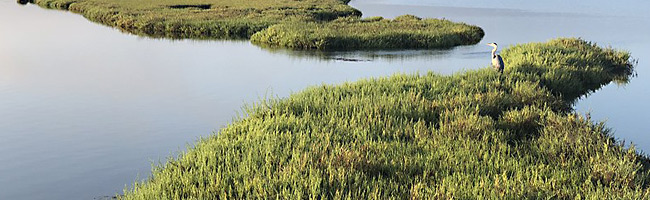
For decades, the California Coastal Commission has struggled to restore Bolsa Chica Wetlands and its endangered marine life as well as a deteriorating water inlet. Lack of capital to reverse erosion and industrial damage along the coastline have thwarted plans to restore Bolsa Chica and all life that depends on a healthy eco-system.
After the drought of 1998, Poseiden Water proposed a desalination plant in Huntington Beach where they successfully lobbied Santa Ana Regional Water Board for an approval to the measure. The proposed plant will impact marine life from Palos Verdes to Dana Point.
In recent studies of the Poseiden Water Desalination Plant operating in Carlsbad, California, the Coastal Commission issued no less than 82 environmental violations including raising salinity levels as far as 80 miles out from the coastline as well as fining Poseiden Water tens of millions of dollars in penalties.
In the course of needing to address the deteriorating wetlands of Bolsa Chica, an amendment to the proposal required the same developer to restore and safeguard the wetlands habitat and maintain the water inlet so crucial to the survival of endangered species and plant life.
Sources:
https://unu.edu/media-relations/releases/un-warns-of-rising-levels-of-toxic-brine.html
https://e360.yale.edu/features/as-water-scarcity-increases-desalination-plants-are-on-the-rise
https://www.un.org/depts/los/global_reporting/WOA_RPROC/Chapter_28.pdf
Conservationists Split Over Poseidon Desal Project’s Potential to Help Bolsa Chica Wetlands
https://sciencing.com/pros-cons-of-desalination-plants-13425360.html
https://www.sciencedaily.com/releases/2019/01/190131143433.htm#:~:text=Brine%20discharged%20from%20the%20Carlsbad,local%20impacts%20on%20sea%20life.&text=%22Desalination%20is%20one%20solution%20for,in%20densely%20populated%20coastal%20areas.
https://www.surfrider.org/campaigns/desalination-plant-huntington-beach
Photo by Crishazzard, CC BY-SA 4.0 (https://creativecommons.org/licenses/by-sa/4.0), via Wikimedia Commons
