
How did you celebrate Earth Day 2016? Around the world trees were planted, rivers and streams cleaned, and countless events were held with the united goal of ensuring our planet's health and humanity's future.
Impressively, Solar Impulse 2 joined the day of tribute by crossing the Pacific Ocean on the 9th leg of its journey to circumnavigate the globe without one drop of fossil fuel!
During the flight, Solar Impulse 2 visionary and pilot,Bertrand Piccard, addressed the UN Secretary-General Ban Ki-moon and 175 heads of states in New York via a cockpit video link as part of the signing of the Paris Agreement on Climate Change.
"Solar Impulse showcases that today exploration is no longer about conquering new territories, because even the moon has already been conquered, but about exploring new ways to have a better quality of life on Earth," says Piccard. "It is more than an airplane: it is a concentration of clean technologies, a genuine flying laboratory, and illustrates that solutions exist today to meet the major challenges facing our society."
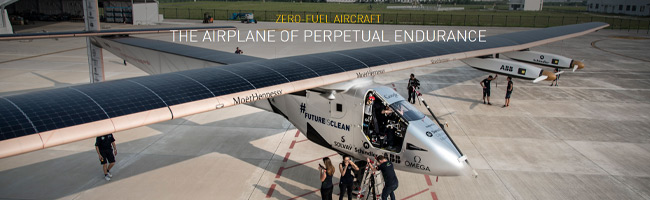
Solar Impulse 2 left Hawaii on April 21, pilot Piccard spent a total 62 hours flying the solar-powered plane which he landed at the Moffett Airfield near San Francisco completing the crossing of the Pacific Ocean with several world records. By attempting the first solar flight around the world, pushing back the boundaries of the possible, going into the unknown, and taking on a project deemed impossible by industry experts, Bertrand Piccard and André Borschberg want to support concrete actions for sustainability and show that the world can be run on clean technologies. Borschberg will take over for the next leg of the trip, flying the craft from California to New York. The team originally set out from Abu Dhabi last March, 2015, in a bid to raise awareness about solar energy. They're expected to return to Abu Dhabi in August later this year. Taking off from Kalaeloa, Hawaii on 4/21, the one-man, solar-powered airplane reached a maximum altitude of 28,000 ft (8,634 m) and an average speed of 40.4 mph (65.4 km/h) as it covered a distance of 2,810 mi (4,523 km). During the day, power to the electric motors was provided by the solar panels on the upper wing surfaces while special batteries keep SI2 aloft at night.
We've followed the Solar Impulse2 history making journey since it's start in 2015. The cockpit is unpressurized, temperatures are cold and the pilots use oxygen. Their undaunted determination is inspiring. Follow their quest at solarimpulse.com
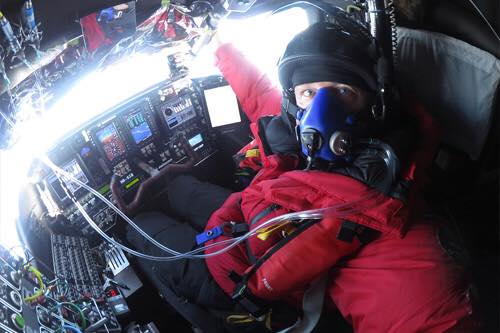
Photo courtesy of Solar Impulse Foundation (https://aroundtheworld.solarimpulse.com/adventure)
(TOP) Plane photo courtesy of Solar Impulse Foundation (https://aroundtheworld.solarimpulse.com/adventure)
