

We at Environmental Research Advocates are excited by the potential implementation of graphene in renewable energy technologies.
The carbon-based super-material is making technology news yet again, as scientists in Korea claim they have developed a graphene supercapacitor that has the potential to drastically improve battery performance in electric vehicles.
As electric automobiles are gaining popularity around the world, Lithium-ion batteries are providing the energy storage necessary to allow these cars to function at comparable distances to gas-powered vehicles. The battery’s main drawback is the time it takes to charge, as lithium-ion batteries require at least a couple hours, if not an entire night, to fully charge. This limits the automobile’s ability to cover long distances without long pit stops.
The solution to these issues is graphene, according to researchers at the Gwangju Institute of Science and Technology in Korea, who have developed a graphene supercapacitor that stores nearly the same amount of energy as a lithium-ion battery, but can charge in a mere 16 seconds and maintain its performance over thousands of charges.
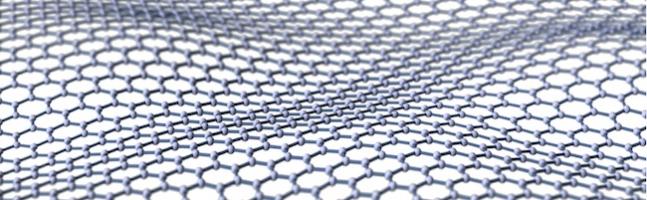
Supercapacitors of the past also possess this ability to charge quickly, but generally lack the energy storage capacity of lithium-ion batteries; the application of graphene as an insulator allows for much higher energy storage, as the carbon-based material has a porous physical structure that creates more surface area to store energy.
Graphene has been touted as a wonder-material, and tech researchers continue to experiment with its many possible uses. It is strong, light, almost transparent, and an excellent conductor. Some potential areas of application include water filters, solar cells, and electrical functions.
If applied to electric cars, these graphene supercapacitors could cut down charging time significantly, even faster than pumping a full tank of gas, while still allowing longer travelling distances between charges. Some scientists believe that we could see graphene supercapacitors replace lithium-ion batteries within the next five to ten years.
