

Jane Goodall, the renowned and beloved primatologist and conservationist, passed away at age 91, leaving behind a legacy of compassion, scientific discovery, and environmental advocacy. Her pioneering work with chimpanzees in Tanzania revealed the emotional depth and social complexity of our closest animal relatives, forever altering how we understand intelligence and empathy in the natural world. Dr. Goodall’s gentle approach and deep empathy allowed her to connect with animals in their natural habitats, earning their trust and uncovering insights that revolutionized primatology. Her journey led her to champion the rights of all sentient beings, becoming a guiding light for many of us to follow in her footsteps.
Born Valerie Jane Morris-Goodall, Jane was the eldest daughter of businessman and racing car driver Mortimer Herbert Morris-Goodall and writer Margaret Myfanwe Joseph. From a young age, she was enchanted by the wonders of nature. That childhood curiosity led her to Africa, where she worked with famed paleontologist Louis Leakey and eventually began her pioneering research at Gombe Stream Reserve. Despite lacking formal scientific training, she persevered with the support of her mother and overcame skepticism from academia. Leakey initially employed her as a secretary at the National Museum in Nairobi, which led to an invitation to join Louis and Mary Leakey at Olduvai Gorge in search of fossils. Her insistence on naming chimpanzees and recognizing their personalities challenged conventional science and helped humanize animal research, forever changing the field.
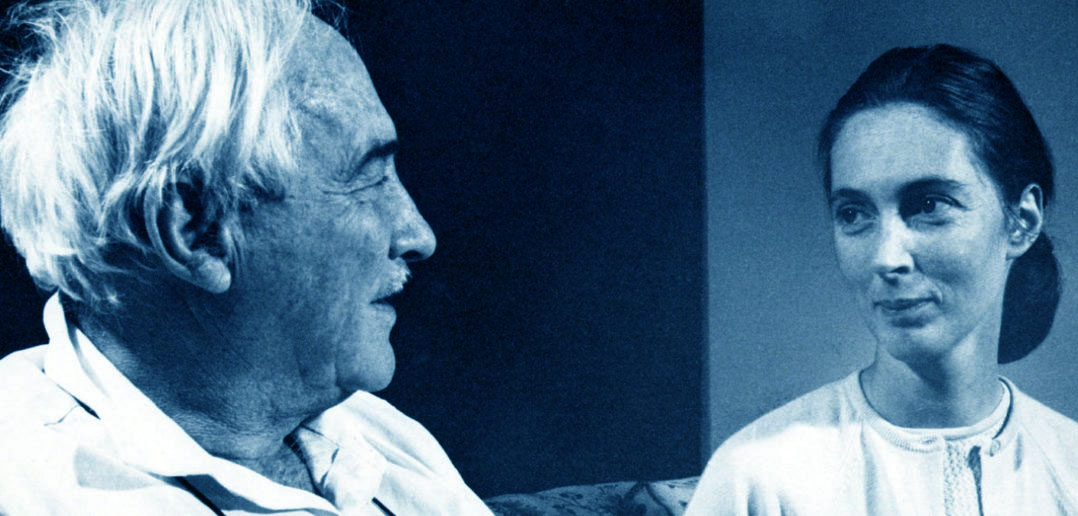
Leakey and Goodall: Scientists Who Changed How We Define ‘Human’ – Image courtesy of Jane Goodall Institute
Goodall’s influence extended far beyond the scientific community. She founded the Jane Goodall Institute and launched Roots & Shoots, a global youth program promoting environmental stewardship and compassionate leadership. Her legacy continues with the ongoing research at Gombe, the community-centered conservation program Tacare, and the work of sanctuaries such as Chimp Eden in South Africa and Tchimpounga in the Republic of the Congo. Rather than confrontational activism, she built bridges and engaged with corporate leaders to find common ground for conservation. She even persuaded oil executives to support environmental efforts, an extraordinary testament to her ability to inspire change across unlikely sectors. Her message was one of hope, unity, and the belief that small actions could lead to meaningful global change.
Throughout her life, Goodall remained a tireless advocate for the planet, traveling extensively to speak about conservation and sustainability. She emphasized humanity’s responsibility to protect our planet from exploitation, criticized the destruction caused by greed, and urged people to act with compassion. Her spiritual presence and unwavering optimism inspired generations to care for the environment and for one another, reminding us that every individual has the power to make a difference.
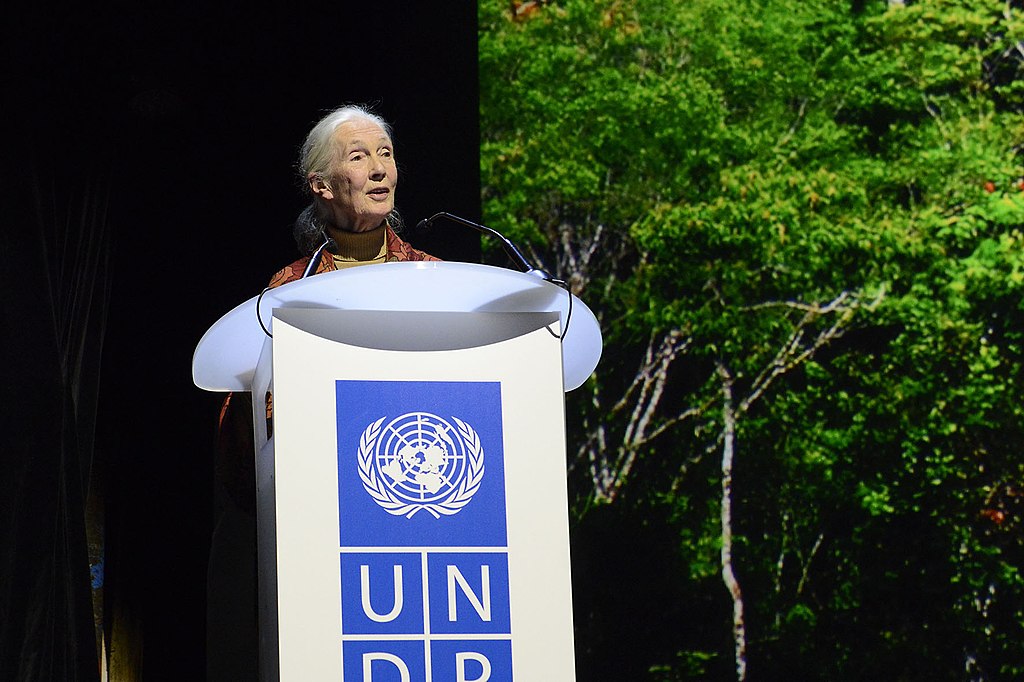
Jane Goodall speaking at United Nations Equator Prize 2015 Award Ceremony – Image courtesy of UNclimatechange from Bonn, Germany, CC BY 2.0, via Wikimedia Commons
Dr. Goodall’s legacy also lives on through the countless accolades and cultural tributes she received during her lifetime. She was named a United Nations Messenger of Peace in 2002, awarded the Templeton Prize in 2021, and awarded the Presidential Medal of Freedom in 2025 by President Biden. Her story was told through documentaries, books, and even commemorated with a Barbie doll and a LEGO set, symbolizing her role as a trailblazer for women in science. In 2019, National Geographic opened Becoming Jane, a traveling exhibit focused on her life’s work, which is still touring across the United States. She authored over 30 books, including children’s titles that nurtured empathy and curiosity in young readers. Her latest publication, The Book of Hope: A Survival Guide for Trying Times, has been translated into more than 20 languages. For many, she was the first female explorer they ever read about, a real-life heroine who proved that science could be both rigorous and compassionate. Her life continues to inspire those who seek to protect the planet and understand its creatures not just through observation, but through love.
Even in her final years, Dr. Goodall continued to radiate hope, believing that change was possible through collective effort. She encouraged people to start small, share stories of kindness, and never give up. On her last day on Earth, she was scheduled to meet with Environmental Research Advocates’ CEO Denise Avchen in Pasadena for a school talk, demonstrating her lifelong commitment to education and advocacy. Her legacy is a call to action: to preserve the beauty of our planet and honor the interconnectedness of all life. As she once wrote, “Together we can change the world.”
Jane is survived by her son Hugo Eric Louis van Lawick (affectionately known as Grub) and her three grandchildren, Merlin, Angel, and Nick, as well as her sister Judy.
Dr. Jane Goodall will be forever missed.
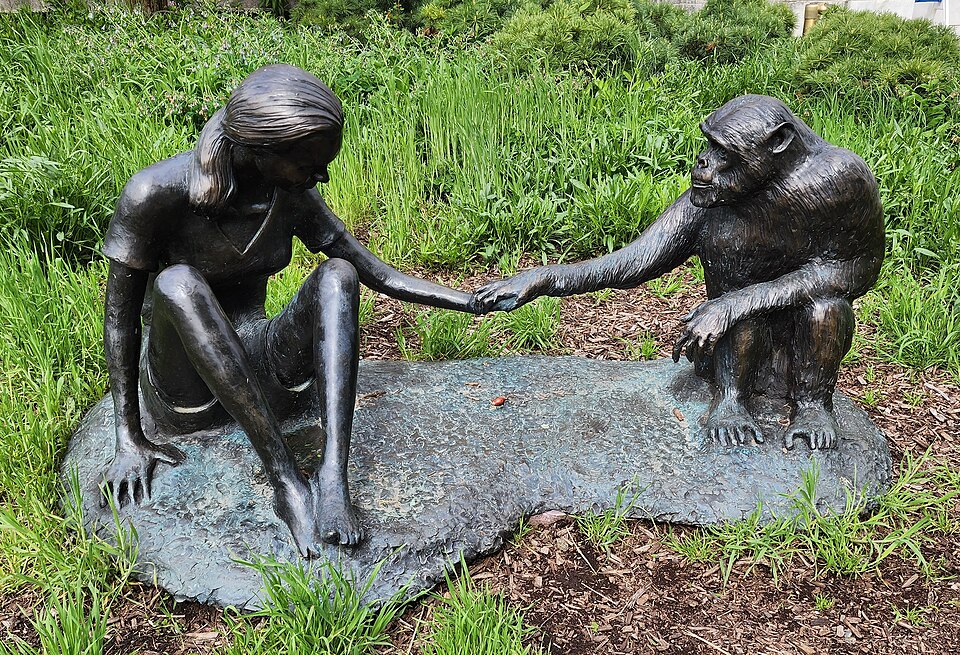
Sculpture of Jane Goodall and David Greybeard outside the Field Museum in Chicago – Image courtesy of Geary, CC0, via Wikimedia Commons

.jpg)
