

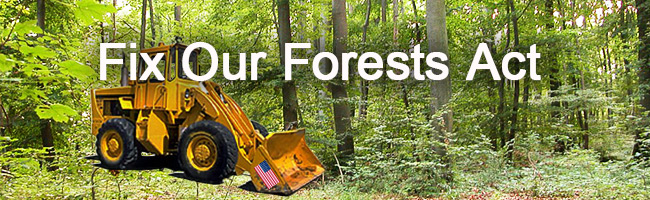
The Fix Our Forests Act, while ostensibly aimed at improving forest health, has drawn criticism for potentially prioritizing logging interests over genuine ecological restoration. Critics argue that the Act, by streamlining environmental reviews and expediting logging projects, could undermine vital protections for mature and old-growth forests, which are crucial for biodiversity and carbon sequestration. The Act’s focus on timber extraction as a primary solution for forest management overlooks the complex ecological dynamics at play and could lead to unintended consequences, such as habitat loss and increased wildfire risk in the long term. This raises concerns about the Act’s true intentions and whether it genuinely serves the long-term interests of forest ecosystems.
One of the main concerns revolves around the Act’s potential to weaken environmental safeguards under the National Environmental Policy Act (NEPA). By creating exemptions and fast-tracking logging projects, the Act could limit public input and scientific review, leading to poorly planned projects that harm sensitive ecosystems. For instance, the accelerated removal of trees, even under the guise of wildfire prevention, can disrupt natural fire regimes and reduce the forest’s resilience to future fires. Moreover, the emphasis on logging may detract from more effective and ecologically sound strategies, such as prescribed burns and targeted thinning, which can promote forest health and reduce wildfire risk without sacrificing biodiversity.
Furthermore, the Fix Our Forests Act faces criticism for its potential impact on climate change mitigation. Mature and old-growth forests are significant carbon sinks, storing vast amounts of carbon dioxide that would otherwise contribute to global warming. Logging these forests releases this stored carbon into the atmosphere, exacerbating climate change. While proponents argue that replanting trees can offset these emissions, it takes decades, if not centuries, for new trees to sequester the same amount of carbon as mature forests. The Act’s emphasis on timber extraction thus undermines broader efforts to combat climate change and transition to a more sustainable economy.
In conclusion, while the Fix Our Forests Act may offer some benefits in terms of streamlining forest management, its potential drawbacks regarding environmental protection, climate change mitigation, and biodiversity conservation cannot be ignored. A more holistic approach to forest management is needed, one that prioritizes ecological integrity, community engagement, and long-term sustainability over short-term economic gains. Only then can we truly fix our forests and ensure their health and resilience for future generations.
References:
Ellen Montgomery, Director, Great Outdoors Campaign, Environment America: https://environmentamerica.org/articles/the-fix-our-forests-act-wont-actually-fix-our-forests/
Katri Rusanen & Jouni Pykäläinen & Teppo Hujala: Research approaches to sustainable forest-based value creation: A literature review – ScienceDirect. https://www.sciencedirect.com/science/article/pii/S1389934124000753
Guillaume Moreau , Catherine Chagnon , Alexis Achim , John Caspersen , Loïc D’Orangeville , Martina Sánchez-Pinillos , Nelson Thiffault: Opportunities and limitations of thinning to increase resistance and resilience of trees and forests to global change | Forestry: An International Journal of Forest Research | Oxford Academic. https://academic.oup.com/forestry/article/95/5/595/6561434
Vuyo Qasha,Alen Manyevere,Trevan Flynn &Chuene Victor Mashamaite: Assessing the impact of ecological forest restoration on soil carbon stocks in Sub-Saharan Africa: a systematic review. https://www.tandfonline.com/doi/full/10.1080/17583004.2024.2404409
Trump signs executive order to cut down 280 million acres of forest: https://www.yahoo.com/news/did-trump-really-order-280-million-acres-of-national-forest-to-be-cut-down-223112112.html
https://www.ecowatch.com/trump-public-forests-private-logging.html
https://www.latimes.com/environment/story/2025-08-27/trump-administration-presses-rollback-roadless-rule-wild-forestland
IMAGES:
Forest imagery: Oliver Herold, CC BY 3.0 <https://creativecommons.org/licenses/by/3.0>, via Wikimedia Commons
Bulldozer: via Wikimedia Commons
